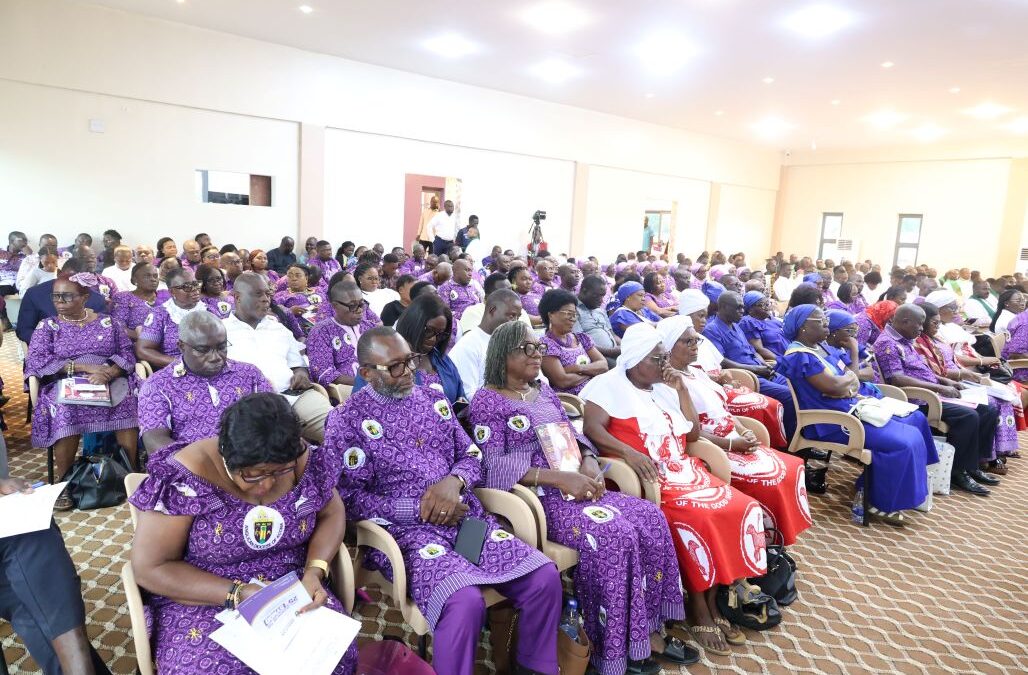
As the Anglican Diocese of Accra holds the last session of its Twenty-Fifth Synod at the Anglican Retreat Centre, Ashalley Botwe, one question worth asking is: What exactly is Synod, and why is it so important to the life of the Anglican Church?
Perhaps one of the simplest descriptions of Anglican polity provides the answer. The Anglican Church is often described as being “episcopally led and synodically governed.” It is a short statement, but it captures an important feature of how Anglicans understand authority, leadership and participation in the Church.
To understand Synod, one must understand these two dimensions together.
Episcopally Led
The word episcopal comes from the Greek word associated with oversight and refers, in this context, to the ministry of the bishop. Anglicanism has retained the historic order of bishops, priests and deacons, and the diocese is placed under the pastoral and spiritual oversight of a bishop.
The bishop is not merely a ceremonial figure. The bishop provides leadership to the Diocese, guards its faith and doctrine, exercises pastoral oversight and gives direction to its mission and ministry. The bishop also presides over the diocesan Synod.
This is what is meant when the Church is described as episcopally led.
However, episcopal leadership in Anglicanism does not mean that the bishop governs independently of the wider Church. The bishop exercises this ministry within the constitutional and synodical life of the Church.
Synodically Governed
A Synod is an assembly of the Church gathered for deliberation, discernment and decision-making. In Anglican practice, it brings the bishop, clergy and representatives of the laity together to consider matters concerning the life and mission of the Church.
The laity are not spectators in Anglican governance. They participate alongside the clergy because the Church belongs to the whole people of God and its mission is undertaken by the whole Church.
What Does Synod Actually Do?
Synod provides the forum within which the Diocese considers its common life.
Reports on various areas of ministry are presented and examined. Policies and programmes may be considered. Financial matters and budgets come before the house. Motions and resolutions are debated. Matters affecting evangelism, education, worship, administration, development and the general mission of the Church are discussed.
Where required by the constitution and canons, Synod also legislates for the orderly government of the Church.
Decisions taken at Synod are not merely discussions among delegates. They become part of the formal direction of the Diocese and may guide parishes, institutions, clergy and diocesan structures.
Neither a Parliament Nor an Episcopal Monarchy
It is tempting to understand Synod simply as the Anglican version of Parliament. The comparison can be helpful, but it is incomplete.
Synod involves debates, motions, voting and rules of procedure. Yet it is first and foremost an ecclesial gathering. Its primary purpose is not simply to determine majority opinion, but to discern what best serves the mission of Christ and the wellbeing of his Church.
Why Clergy and Laity?
The presence of both clergy and laity is not merely administrative.
Clergy bring to Synod their experience of pastoral ministry, sacramental life, teaching and leadership within congregations. Lay delegates bring their experience of Christian life within families, professions, communities and society.
The bishop provides episcopal oversight to this gathered Church.
Synod becomes a place where these perspectives meet. The parish engages the Diocese; clergy and laity listen to one another; and the bishop listens to the Church over which episcopal oversight is exercised.
Summary
Synod is a central expression of Anglican governance in which the bishop leads the Diocese while clergy and laity participate in discerning and shaping its life and mission. It is not merely a meeting or administrative event, but a structured gathering of the Church for prayerful reflection, shared decision-making and the ordering of its common life under episcopal leadership.