The Bishop of the Anglican Diocese of Accra, the Rt Rev’d Dr Daniel Sylvanus Mensah Torto, has called on the Church to take an active role in confronting the worsening sanitation situation in Accra, insisting that Christians cannot be excluded from the wider national responsibility of keeping communities clean.
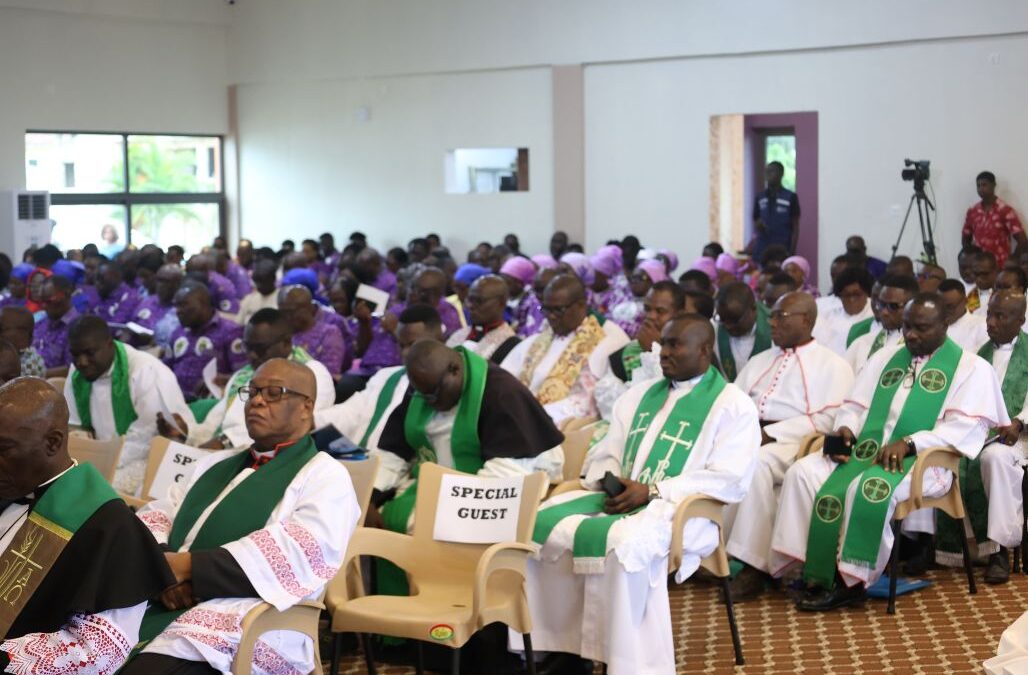
In his Charge delivered at the opening of the last session of the Twenty-Fifth Synod of the Anglican Diocese of Accra at the Anglican Retreat Centre, Ashalley Botwe, Bishop Torto drew attention to the filth that continues to plague the capital and its consequences for public health, flooding and the general wellbeing of residents.
Reflecting particularly on the floods that affected parts of Accra on June 29, 2026, the Bishop expressed sympathy with victims and bereaved families, but observed that the severity of rainfall alone could not account for the extent of the problem.
He pointed to poor sanitation and the widespread blockage of drains with plastic waste, sachet water rubbers, food containers and other solid waste as factors that continue to worsen flooding in the city. Irregular disposal of refuse into drains, he noted, leaves rainwater with nowhere to flow during heavy downpours, causing water to back up into homes, roads and communities.
Beyond flooding, Bishop Torto warned that poor sanitation presents a serious public health challenge. Stagnant water mixed with waste creates breeding grounds for diseases such as cholera, typhoid and malaria, while floodwaters carry accumulated filth into streets and homes, damage roads, disrupt businesses and, in some cases, contribute to the loss of lives.
Against this background, the Bishop called for a return to what he described as an old Christian adage:
“Cleanliness is next to Godliness.”
For Bishop Torto, the call is more than a familiar saying. It places a responsibility upon Christians to demonstrate their faith through the care of their surroundings and through responsible citizenship.
He therefore urged the Diocese to champion proper sanitation within communities, schools and parishes across Accra and beyond.
The call comes within a broader national conversation about civic responsibility and the need for citizens to take ownership of the condition of their communities. While public authorities have a responsibility to provide and maintain effective sanitation and drainage systems, the Charge places equal emphasis on the conduct of individuals and institutions whose daily actions contribute either to the solution or to the problem.
The Church, he maintained, must not consider itself outside that responsibility.
With congregations located in communities across the capital, the Anglican Church has the opportunity not only to preach responsible citizenship but also to model it. Parishes, schools, ministries and individual members can become centres from which better sanitation practices are taught, encouraged and demonstrated.
The Bishop’s call consequently challenges Christians to see keeping the environment clean not simply as a municipal responsibility but as part of the practical expression of Christian discipleship and concern for one’s neighbour.
As clergy and lay delegates deliberate at the Twenty-Fifth Synod, the charge to return to “Cleanliness is next to Godliness” offers the Diocese a simple but compelling mandate: a cleaner Ghana requires responsible citizens, and the Church must be counted among those leading that responsibility.